

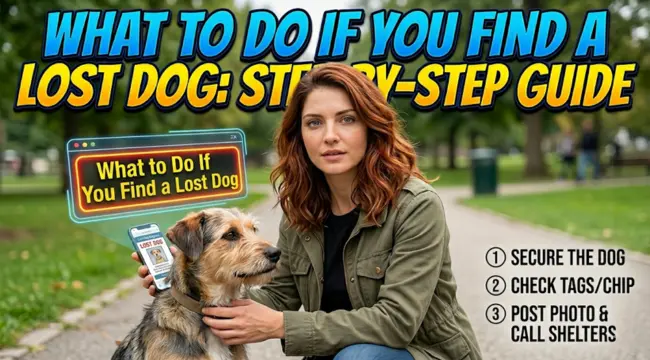
You’re on your morning walk, and a dog appears-no owner in sight, no lead, maybe looking confused or nervous. Your first instinct is to help, but what exactly should you do? Finding a lost dog is more common than most people realise, and how you handle those first few minutes can make the difference between a quick reunion and a long, stressful ordeal for both the dog and its owner.
This step-by-step guide covers everything you need to know if you find a stray or lost dog, from safely approaching the animal to reuniting it with its family.
Key Takeaways:
- Stay calm and assess the situation – a lost dog may be frightened, injured, or reactive, so approach with caution.
- Check for identification first – collar tags, QR codes, and microchips are the fastest routes to finding the owner.
- Never chase a loose dog – this can push them further away or trigger a fear response.
- Contact local shelters, vets, and dog wardens as soon as possible if the dog has no ID.
- Use social media and community groups to spread the word quickly.
- Keep the dog safe and contained while you work on locating the owner.
Step 1: Assess the Situation Before You Approach
Not every loose dog is lost. Some dogs may be off-lead in a park with an owner nearby, while others may be free-roaming dogs in rural areas. Before you intervene, take a moment to observe.
Signs a dog may be genuinely lost:
- They appear confused, pacing, or distressed
- They’re in an unusual location for an unaccompanied dog (near a busy road, a car park, or a residential area far from parks)
- They’re wearing a collar but have no human in sight
- They approach people or other dogs in a needy or submissive way
- They seem anxious or afraid – tucked tail, flattened ears, whale eyes
If the dog appears calm and purposeful – trotting along a familiar route – they may simply be a neighbourhood dog heading home. Use your judgement.
Step 2: Approach Carefully
A lost dog is often a stressed dog, and stressed dogs can behave unpredictably – even friendly breeds. The way you approach matters.
Do:
- Crouch down to make yourself smaller and less threatening.
- Turn your body sideways rather than facing the dog head-on, which can be perceived as confrontational.
- Speak in a calm, gentle voice – soft tones help the dog assess that you’re not a threat.
- Hold out the back of your hand for the dog to sniff if they approach you.
- Move slowly and let the dog come to you on their terms.
Don’t:
- Chase the dog. This is the single biggest mistake people make. A frightened dog will run, and once they bolt, they become much harder to find.
- Make direct eye contact for prolonged periods – many dogs interpret this as a challenge.
- Reach over the dog’s head to grab their collar. This can startle them.
- Corner the dog against a wall, fence, or car. A dog that feels trapped may snap out of fear.
If the dog is on a busy road or in immediate danger, call your local animal control or police non-emergency line for help rather than risking your own safety.
Step 3: Check for Identification
Once the dog is comfortable enough to let you get close, check for identification. This is by far the quickest way to get the dog home, and modern ID options mean there’s often more information available than you might expect.
Collar Tags
The most obvious starting point. Look for:
- An engraved tag with a name, phone number, or address. In many countries, dogs are legally required to wear a tag with the owner’s name and address in public.
- A QR code tag. These are becoming increasingly common. Simply open your phone camera, point it at the code, and it will pull up a webpage with the owner’s contact details, the dog’s medical information, and sometimes even behavioural notes. Some tags also have NFC, which means you can tap your phone against the tag instead of scanning. No app download needed – the information loads straight in your browser.
- A council registration tag or rabies tag (more common in the US and Australia), which can be traced through local authorities.
If you find a QR or NFC tag, scan it immediately. These digital profiles often contain multiple phone numbers, the dog’s vet details, and notes about any medical conditions or allergies – information that’s especially useful if the dog appears unwell or injured. Some platforms also notify the owner the moment the tag is scanned, so they may already know their dog has been found before you even make a call.
Microchip
If there’s no visible tag, the dog may still be microchipped. You won’t be able to check this yourself – a vet, shelter, or animal warden can scan for a chip using a handheld reader. It takes seconds and is completely painless for the dog.
A microchip contains a unique ID number linked to the owner’s contact details in a database. However, microchips are only useful if the owner has kept their information current, which studies suggest many owners fail to do after moving or changing phone numbers.
Step 4: Contain the Dog Safely
If the dog has no ID or you can’t reach the owner immediately, you’ll need to keep the dog safe while you work on finding them a way home.
If you can take the dog with you:
- Use a lead, a belt, or even a piece of rope as a temporary restraint – never carry a dog you don’t know, as they may panic and bite.
- Offer water if you have it, especially in warm weather.
- Avoid feeding the dog unfamiliar foods. While it’s tempting to share whatever you have, many common human foods can be harmful. Items like pork rinds, cotton candy, and Vienna sausages are all unsafe for dogs. Plain water is always the safest option.
- Keep the dog away from other animals to avoid conflict or the spread of disease.
If you can’t take the dog with you:
- Stay with the dog if possible and call your local council’s dog warden, the RSPCA (in the UK), or animal control (in the US).
- Note the exact location, time, and a description of the dog – breed (or best guess), colour, size, collar colour, and any distinguishing marks.
- Take photos. A clear, well-lit photo of the dog is the single most useful thing you can produce for a lost dog poster or social media post.
Step 5: Report the Found Dog
Even if you’re keeping the dog safe at your home, it’s important to file a report so that when the owner starts searching, the dots connect.
Contact these organisations:
- Your local council dog warden. In the UK, local authorities have a legal obligation to deal with stray dogs. They maintain a register of found and lost dogs and can scan for microchips.
- Nearby veterinary practices. Vets can scan for a microchip and will often keep a notice board for lost and found pets. If the dog is injured or unwell, a vet should be your first stop regardless.
- Local animal shelters and rescue centres. Many maintain online lost-and-found databases. Call rather than just check websites – databases aren’t always updated promptly.
- The police non-emergency line. In some areas, police still handle stray dog reports, especially out of hours.
Step 6: Use Social Media and Community Networks
Social media is one of the fastest ways to reunite a lost dog with its owner. The reach of a single shared post can cover an entire town within hours.
Where to post:
- Local Facebook groups. Search for “[your area] lost and found dogs” or “[your area] community group.” These are often incredibly active and well-monitored.
- Nextdoor. Hyperlocal by design, making it ideal for reaching people in the immediate area where the dog was found.
- Instagram and X (Twitter). Use location tags and relevant hashtags like #LostDog, #FoundDog, and your area name.
- Pawboost, DogLost (UK), and PetFBI (US). Dedicated lost pet platforms with large user bases and email alert systems.
What to include in your post:
- A clear photo of the dog
- The location and time the dog was found
- A description of the dog’s breed (if known), size, colour, and collar details
- Your contact information (or a request for the owner to message you)
- Do not include every identifying detail. Withhold one or two specifics – such as the exact collar colour or a unique marking – so that anyone claiming to be the owner can verify their identity.
Step 7: What to Do If No Owner Comes Forward
Most lost dogs are reunited with their owners within 24 to 48 hours, especially if the dog has some form of identification. But occasionally, no one comes forward.
If the owner can’t be found:
- Contact your local authority. In the UK, councils hold stray dogs for seven days before they can be rehomed. In the US, holding periods vary by state but are typically three to five days.
- Work with a rescue organisation. If you’ve been fostering the dog and want to continue, many rescues will help facilitate a proper adoption process, including health checks and vaccinations.
- Consider fostering or adopting. If you’ve bonded with the dog and no owner has been found after the legal holding period, you may be able to formally adopt them. Be prepared for the commitment – a new dog means adjusting to their dietary needs, exercise requirements, and potential behavioural quirks that emerge as they settle in.
Tips for Dog Owners: Making It Easy for Finders
If reading this has made you think about your own dog’s identification setup, here are a few things worth checking:
- Is your dog’s collar tag legible? Engraved tags wear down over time. If a stranger can’t read it, it’s not doing its job.
- Is your microchip information up to date? Log in and check – it takes two minutes and could save hours of searching.
- Have you considered a digital tag? Tags with scannable QR codes allow you to store far more information than an engraved disc and can be updated anytime without buying a replacement.
- Does your dog have a recent, clear photo on your phone? Not the Instagram-worthy sunset shot – a straightforward image that shows their size, colouring, and any markings.
Being prepared doesn’t mean being paranoid. It means that if your dog ever does go missing, the person who finds them has everything they need to bring them home.
Final Thoughts
Finding a lost dog can be stressful, but it’s also one of those moments where a small act of kindness has an outsized impact. A dog that might have wandered into traffic, gone without food and water, or spent a terrified night alone gets to go home – because someone stopped, checked for a tag, and made a phone call.
The most important thing to remember is to stay calm, check for ID, and spread the word as quickly as possible. Most lost dog stories have happy endings, and more often than not, it’s because an ordinary person did exactly the right thing at the right moment.
If you’ve ever been reunited with a lost pet, you know the feeling. And if you ever find yourself on the other side of that moment – standing on a pavement with someone else’s confused Labrador looking up at you – now you know exactly what to do.